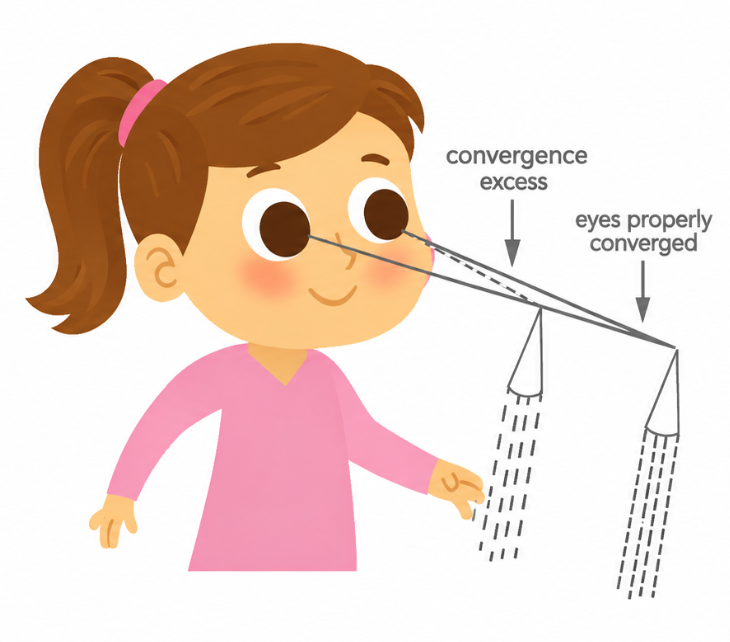
Convergence Excess
Convergence excess is a vision condition in which the eyes turn inward too much when focusing on close objects. This over-convergence can make near tasks such as reading, writing, or using digital devices uncomfortable and tiring. The condition commonly affects children and young adults, especially those who spend long hours performing close work.
People with convergence excess may experience symptoms such as headaches, eye strain, blurred vision, double vision, and difficulty concentrating during reading. Some individuals may complain that words appear to move on the page or that reading becomes difficult after only a short time. Because these symptoms can interfere with school or work performance, the condition may significantly affect daily activities and learning.
Convergence excess is usually diagnosed during a comprehensive eye examination. A behavioural optometrist assesses how the eyes focus and work together at different distances. In many cases, the condition is associated with focusing problems or uncorrected hyperopia (long-sightedness).
Treatment depends on the severity of the condition and the symptoms experienced. Prescription glasses, particularly for hyperopia (long-sightedness), may help reduce excessive eye turning. Vision therapy exercises are also commonly used to improve eye coordination and visual comfort. Early diagnosis and treatment can greatly improve reading ability, concentration, and overall visual performance in both children and adults.