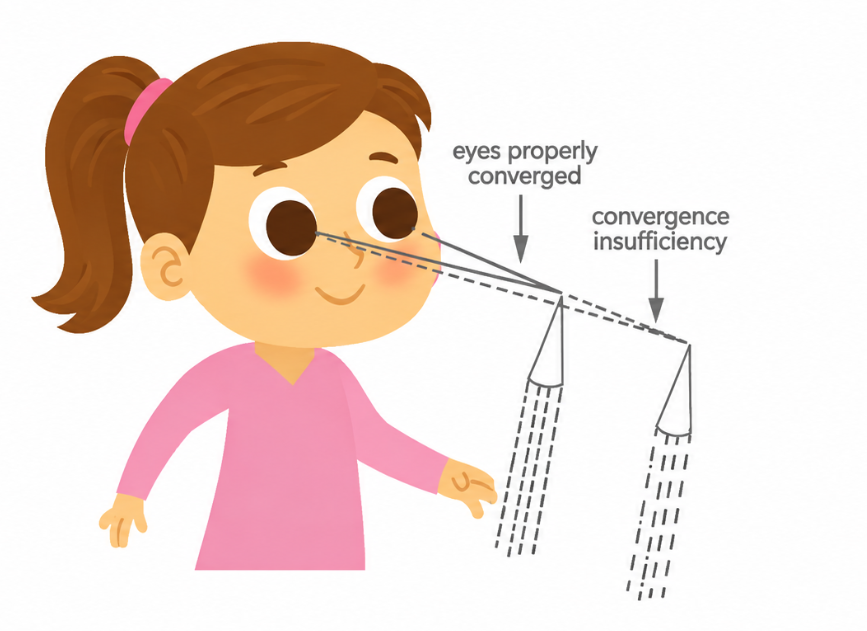
Convergence Insufficiency
Convergence insufficiency is a common vision condition that affects the ability of the eyes to work together when focusing on nearby objects. Normally, both eyes turn inward smoothly when reading or doing close work. In people with convergence insufficiency, the eyes struggle to maintain this alignment, leading to visual discomfort and difficulty concentrating.
The condition is often seen in school-aged children and adults who spend long periods reading or using digital devices. Common symptoms include double vision, headaches, blurred vision, eye strain, and difficulty reading for extended periods. Some individuals may lose their place while reading, avoid close work, close one eye when reading, or experience fatigue after short periods of concentration.
Because the symptoms can resemble learning or attention difficulties, convergence insufficiency may sometimes go undiagnosed. A comprehensive eye examination by an optometrist can identify the condition through specific tests that measure eye coordination and focusing ability.
Treatment is usually effective and may include vision therapy exercises designed to improve eye teamwork and focusing skills. In some cases, special glasses or prism lenses may be prescribed to help reduce symptoms, enhance reading performance, concentration, and overall quality of life.